


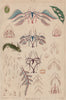

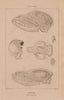

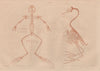

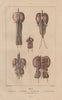

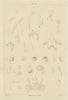

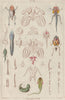



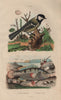

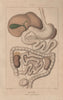

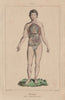


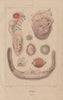


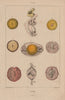

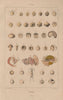

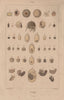


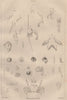


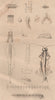


Skeletons, metamorphosis and reproductive anatomy show the scientific range of the prints after Gaspard Joseph Martin-Saint-Ange (1803–1888), the French physician and naturalist who drew anatomical subjects for Guérin's Dictionnaire pittoresque d'histoire naturelle et des phénomènes de la nature. Dated 1833–1834, the plates move from the human skeleton and internal organs to bird kidneys, insect transformations and the development of eggs, setting human structures beside those of birds, reptiles and other animals. Separate engravers cut the plates from his drawings, Duménil being credited on a human-skeleton sheet, and plates on phrenology and congenital variations reflect the science of the dictionary's own day.
EU orders up to €150 are sent VAT- and duty-paid — no additional taxes on arrival
Authenticity Guaranteed - We only sell original antique & vintage items
Can we help? Call us on +44-208-960-3476 • FAQs
All our products are exempt from US tariffs — no additional duties or taxes payable on arrival.


- Shop by Country
- Shop by Cartographer
- Shop Maps by Type
- Shop Prints by Subject