


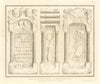


Samuel Lysons recorded Roman altars, medieval crosses and old houses as evidence of local history rather than as picturesque scenery. An engraver and antiquary who lived from 1763 to 1819, he worked with his brother Daniel on Magna Britannia and illustrated other topographical studies. The early nineteenth-century prints here concentrate on Cumberland and neighbouring northern sites, with Roman forts and inscribed stones beside church crosses, gravestones, Naworth Castle and the celebrated drinking glass known as the Luck of Edenhall, each drawn with careful attention to its inscriptions, shape and surviving fabric.
EU orders up to €150 are sent VAT- and duty-paid — no additional taxes on arrival
Authenticity Guaranteed - We only sell original antique & vintage items
Can we help? Call us on +44-208-960-3476 • FAQs
All our products are exempt from US tariffs — no additional duties or taxes payable on arrival.


- Shop by Country
- Shop by Cartographer
- Shop Maps by Type
- Shop Prints by Subject