
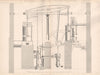

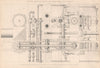


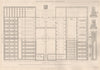


Steam engines taken apart in plans, elevations, sections and projections fill prints from The Engineer and Machinist's Drawing-Book, published by Blackie & Son and here in the 1876 edition. The plates move from complete engines to connecting rods, cranks, beams and wheel gearing, and explain Watt's parallel motion, oscillating cylinders and the conversion of reciprocating movement into rotation. Exercises in conic sections, helical curves and eccentric wheels tie geometry to construction, while lessons in shading, cast shadows and conventional material tints show how a draughtsman distinguished surfaces and components on paper. Railway workshops at Worcester and a Glasgow blowing engine provide real industrial examples.
EU orders up to €150 are sent VAT- and duty-paid — no additional taxes on arrival
Authenticity Guaranteed - We only sell original antique & vintage items
Can we help? Call us on +44-208-960-3476 • FAQs
All our products are exempt from US tariffs — no additional duties or taxes payable on arrival.


- Shop by Country
- Shop by Cartographer
- Shop Maps by Type
- Shop Prints by Subject